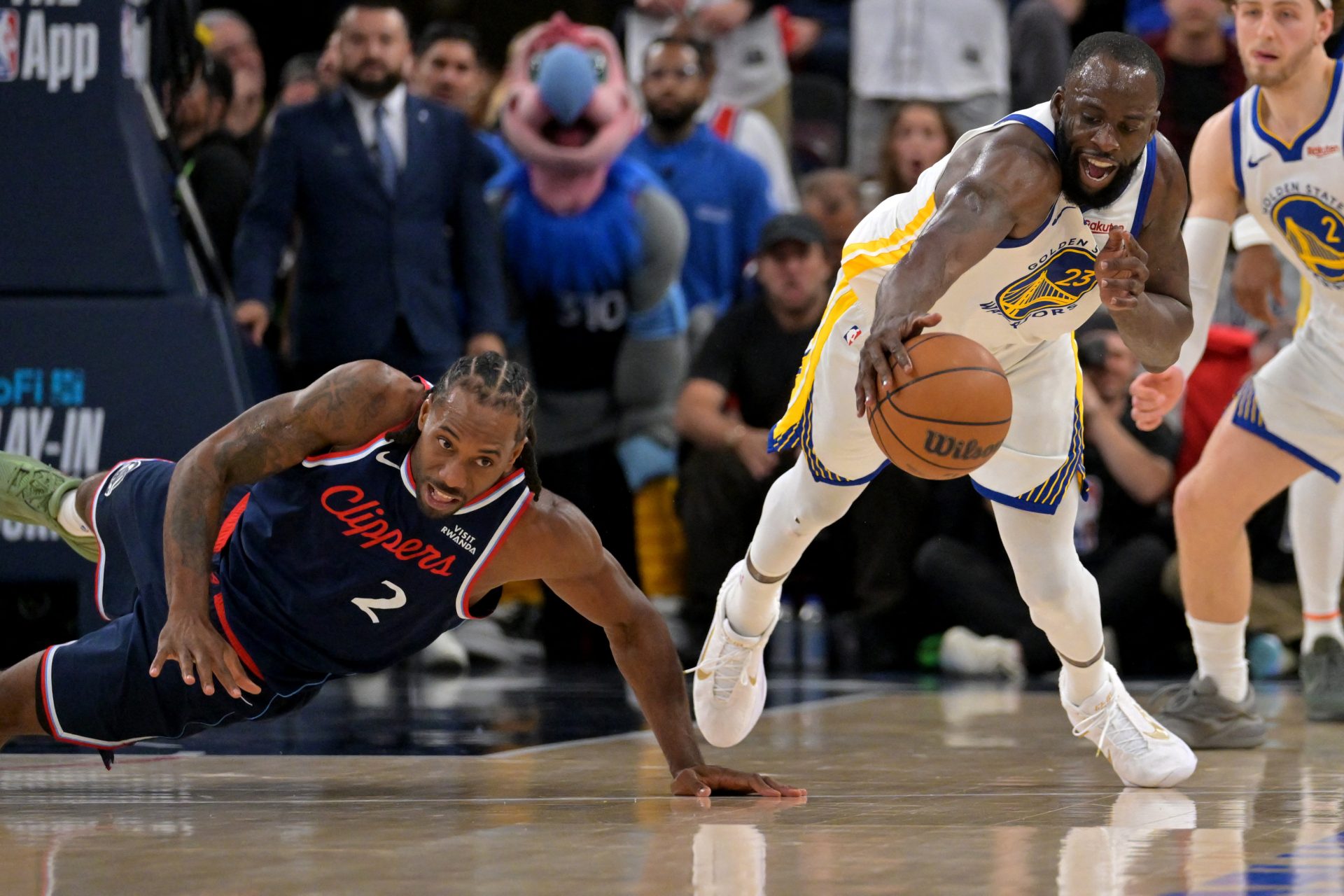
The NBA has already resolved the Kawhi Leonard–Los Angeles Clippers case—if you want our take on the penalties, part of the staff weighed in on the podcast yesterday—but Draymond Green believes the investigation should open a far broader debate.
Not about how much the player knew or whether the league’s penalties were sufficient, but about the system itself that caps the income players can receive.
The NBA has fined the Clippers $30 million, suspended their owner, Steve Ballmer, for one year, and stripped the franchise of five consecutive first-round picks in the Draft, between 2029 and 2033. Leonard, for his part, emerges nearly unscathed: $700,000 to be paid. Neither suspensions nor voiding of his current lucrative contract.
A punishment distribution that satisfies the Golden State Warriors’ forward.
“I’m glad the team took the larger share of the sanction, not Kawhi. We’d heard many times that Kawhi could be suspended, and I’m glad that wasn’t the case.”
“And, as I said, we need to address the issues of the salary cap. I think that’s what this all points to. Why does a salary cap exist? Why are players prevented from earning money from team sponsors, from the league, or from anyone else?”
“We are talking about a league that is player-centric, player-focused, driven by the players and looking out for their interests. And here we had a situation where a player could earn between $20 and $30 million additional dollars and we reacted by saying: ‘Yes, you’re in trouble.’ I’m glad Kawhi did not receive the majority of the punishment. I find that absolutely wonderful.”
The position taken by Green thus goes well beyond personal defense of Leonard. The Warriors forward questions whether a competition that prides itself on being driven by its stars should limit the avenues through which these players can boost their earnings.
Nevertheless, there is a significant difference between the general question Draymond raises and the concrete facts that the NBA sanctioned.
The rule does not prevent players from signing independent commercial deals with companies that also maintain relationships with their teams. What it prohibits is for the franchises to initiate, facilitate, or induce those contracts to provide a player with additional compensation beyond the salary cap.
According to the report prepared by law firm Wachtell, Lipton, Rosen & Katz, the Clippers intervened in agreements between Leonard and four companies: Aspiration Partners, Boingo Wireless, Daktronics and Lockton Insurance.
The investigation concluded that the organization introduced the parties, participated in drafting some terms, and offered lucrative long-term deals to those companies to favor Leonard’s deals. It also established that Dennis Robertson, the player’s uncle and then agent, pressed the Clippers on Kawhi’s behalf to secure around ten million dollars a year in external income.
The NBA thus maintains that the problem was not Leonard earning that money, but that the Clippers used their business relationships to facilitate it “outside” of his contract.
The report also does not determine that Leonard (who received $18 million from three of those companies and who requested altering the cash-to-equity distribution of his Aspiration contract) personally knew all the mechanisms used by the franchise, one of the aspects most debated and that has raised the most skepticism.
An Uneven Ceiling and No Limits
Draymond opts to give the organization the benefit of the doubt and to shoulder the burden of responsibility on the franchise. A stance consistent with his usual defense of players’ interests, but one that has sparked strong reactions among fans.
A large portion of the comments published after his remarks questioned how Leonard could sign multi-million deals and receive those sums without suspecting there was a relationship between his sponsors and the Clippers.
Green, however, contends that the bigger question should not be how much Kawhi knew, but why the NBA needs to regulate this type of income.
The league’s response is that, without such a restriction, franchises could use sponsors to top up players’ salaries through external means. That would allow the wealthier owners to offer amounts impossible to reflect in contracts and would hollow out the salary cap.