
Sport has been enthralled by technology for more than five years now, especially with the idea of using it as an aid to officiating games. The NBA, led by Adam Silver, is not distant from this path; the issue is that such implementation ends up harming the product because it requires reviewing actions from multiple angles before a verdict can be issued.
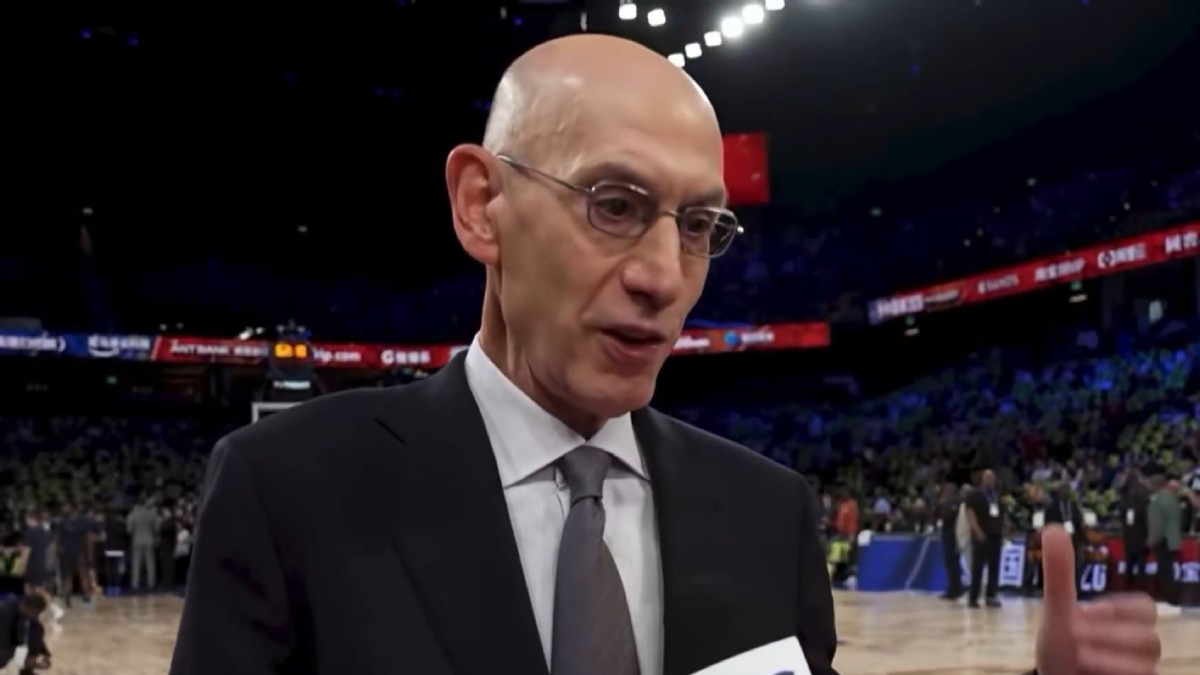
Adam Silver spoke yesterday to CNBC on the occasion of the Houston Rockets-Dallas Mavericks game played in China. He used the opportunity to discuss several technological leaps that they expect to add to the game in the coming years. “We are experimenting with adding a chip to the ball. We call it the ‘smart ball’ and we are producing it together with Wilson,” he begins. Apparently the device is functional, but it has undergone tests. “It weighs one gram. A ball weighs 620g, but even if it is 1/620 of the total weight, we wanted to make sure players don’t notice when it bounces. After testing in the G League and Summer League, no one detected any changes. It’s a good sign.”
The commissioner explains that the most immediate application to reach the light is the monitoring of the ball’s trajectory and its effect, so that any small deviation can be recorded and assist referees in situations of out of bounds or possible illegal blocks. “We think this is an opportunity that, for any small change in the ball’s spin, you could determine, for example, whether the ball touched a finger,” he clarifies.
In addition, he adds that in the future these balls will have applications for athletic improvement. “If a young player shoots 500 attempts, they will be able to see what arc increases the chances of a successful shot and adjust their release to improve as a player.” This kind of use is still under development, but Silver notes that the use of these balls to enhance NBA referees’ performance could begin as early as the 2027-28 season.
The wearables, another matter
In the same interview, Adam Silver is questioned about the use of wearables by players during games. Monitoring accessories that a player can wear on the wrist, undergarments, or similar garments and that record advanced data about their on-court physical activity.
These are already used by professional teams to manage loads, efforts, or simply collect performance data across different physical/technical areas. They are also used for things like monitoring sleep quality. But the Players Association is reluctant to include them in games. “They worry that if, for example, these accessories can register that a player is saving energy, they could be used against them in negotiations for the collective bargaining agreement and contracts. I understand that,” Silver tries to empathize. “So I think we must reach an agreement on how the information should be used. Players essentially wear these devices for about 22 hours a day. They only take them off to play; that doesn’t make sense.”